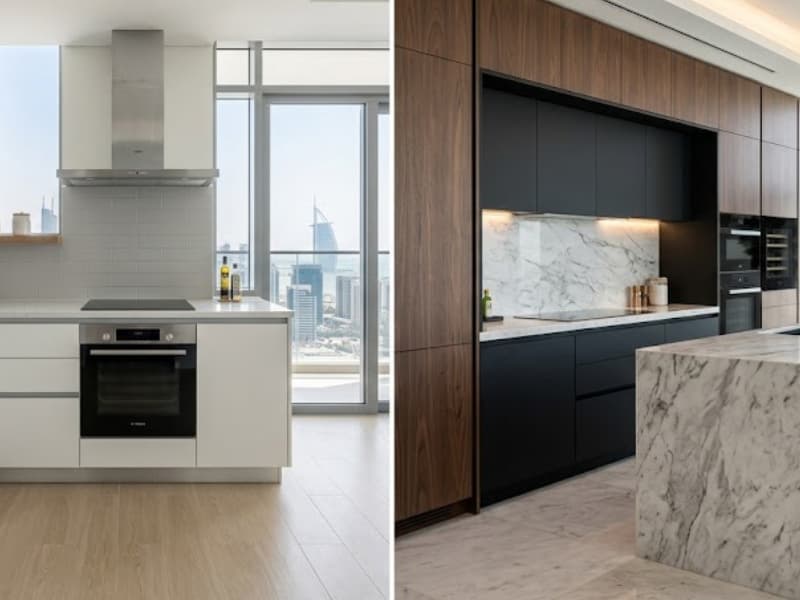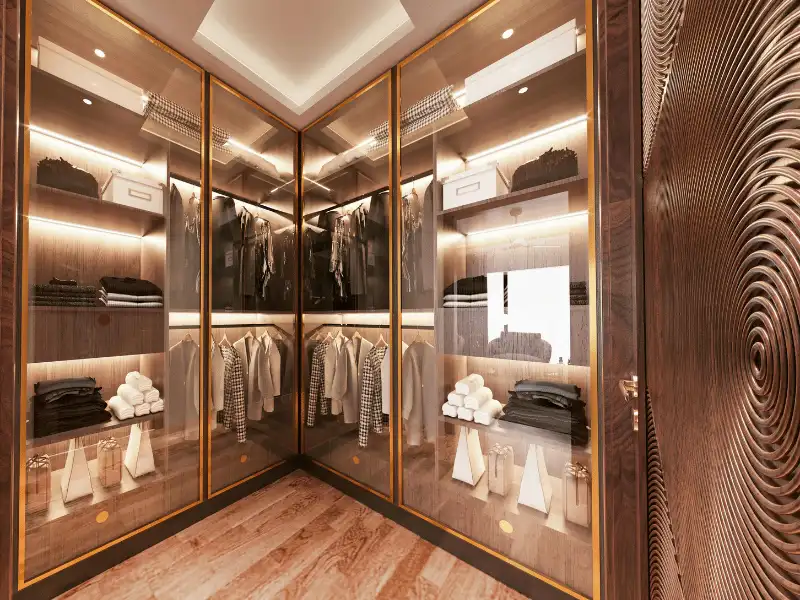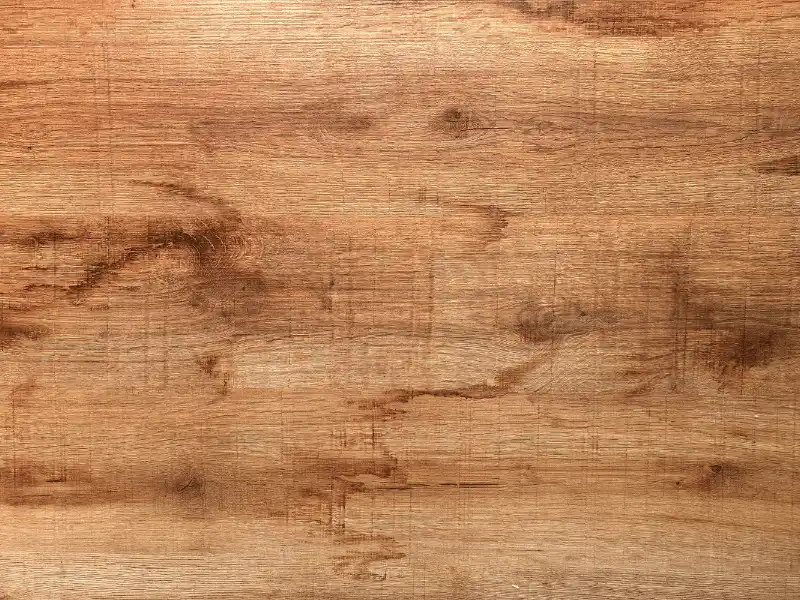
Wood remains one of the most sought-after materials in modern interior design. Whether it is a luxury villa in Palm Jumeirah, a contemporary apartment in Downtown Dubai, or a commercial office fit-out in Business Bay, wood brings warmth, sophistication, and timeless appeal to any space.
However, selecting the right wood material in Dubai is not as straightforward as choosing a finish you like. The UAE’s climate presents unique challenges that can significantly impact the performance, durability, and lifespan of wood-based interior elements.
At Sierra, we have delivered interior fit-out projects across residential, commercial, hospitality, and retail sectors throughout the UAE. One lesson we have consistently learned is that choosing climate-appropriate materials often determines whether an interior looks exceptional for years or begins showing signs of wear within months.
In this guide, we will explore the best wood materials for Dubai interiors, where each material performs best, and how to make informed decisions for long-term value.
Why Wood Selection Matters in Dubai
Dubai experiences extreme heat, high humidity levels during certain seasons, and constant temperature fluctuations caused by air conditioning systems. These environmental conditions affect how wood behaves over time.
Wood naturally expands and contracts when exposed to changing moisture levels. In regions with stable climates, this movement is often minimal. In Dubai, however, improperly selected wood materials can experience:
- Warping
- Swelling
- Cracking
- Delamination
- Surface deterioration
- Joint separation
Engineered wood products are often preferred over traditional solid hardwood because they offer greater dimensional stability under UAE conditions. Studies and industry experience consistently show that engineered wood performs better in environments where humidity and temperature regularly fluctuate.
For this reason, material selection should always be based on both aesthetics and environmental performance.
-
Engineered Wood: The Best Overall Choice for Dubai Interiors
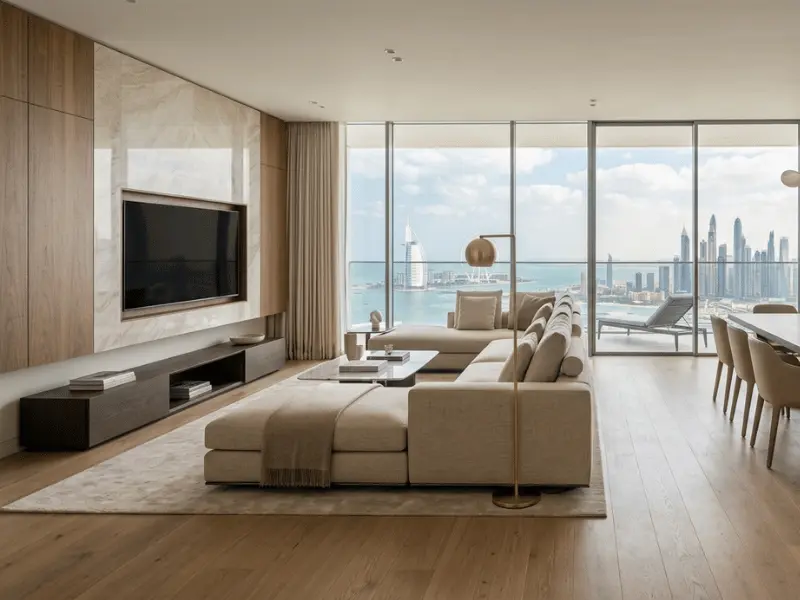
When clients ask us for the best all-around wood solution for Dubai interiors, engineered wood is usually our first recommendation.
Unlike solid timber, engineered wood consists of multiple layers bonded together with grains running in different directions. This construction significantly reduces expansion and contraction caused by humidity changes.
Why Engineered Wood Performs Well
- Greater resistance to humidity fluctuations
- Reduced risk of warping
- Enhanced dimensional stability
- Long-lasting appearance
- Suitable for luxury residential and commercial projects
In our experience, engineered wood flooring and wall paneling have consistently delivered excellent long-term performance across villas, apartments, offices, and hospitality environments.
Best Applications
- Wooden flooring
- Wall cladding
- Feature walls
- Luxury office interiors
- Hotel fit-outs
- Residential living spaces
For clients seeking a balance between luxury aesthetics and durability, engineered wood remains one of the most reliable investments available.
-
Oak Wood: Timeless Elegance and Durability
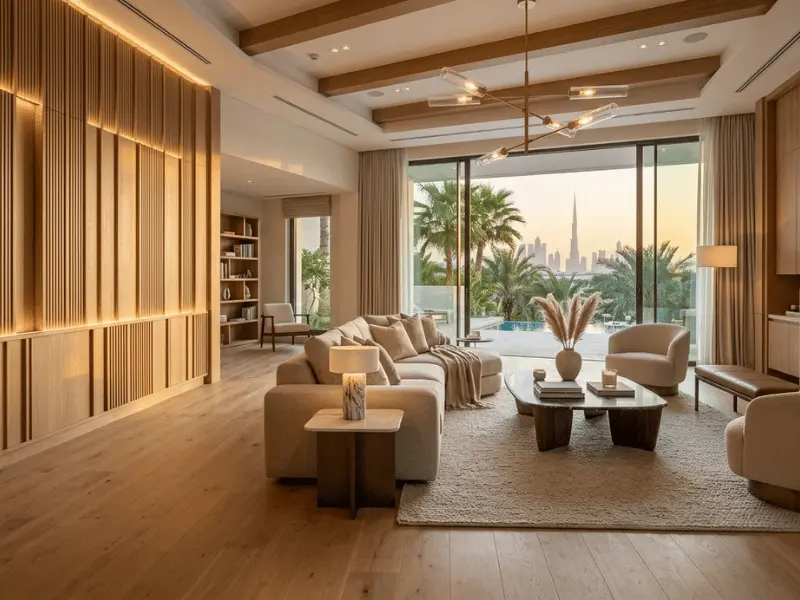
Oak has remained one of the most popular wood species in premium interiors worldwide, and Dubai is no exception.
Its distinctive grain patterns, strength, and versatility make it suitable for both classic and contemporary designs.
Benefits of Oak
- Exceptional durability
- Attractive grain patterns
- Available in various finishes
- Works well in modern and traditional interiors
- Long lifespan
European oak, in particular, continues to dominate luxury flooring and joinery projects due to its adaptability and sophisticated appearance.
Best Applications
- Flooring
- Custom furniture
- Staircases
- Wall paneling
- Luxury joinery
We often recommend oak for clients who want a timeless aesthetic that remains relevant regardless of changing design trends.
-
Walnut Wood: Premium Luxury for High-End Interiors
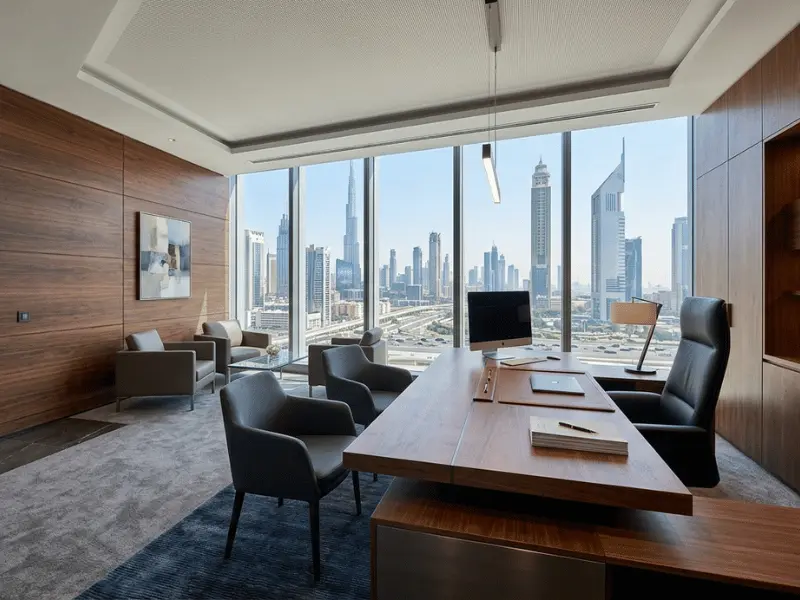
Few materials communicate luxury quite like walnut.
Its rich brown tones, distinctive grain patterns, and elegant character make it a preferred choice for executive offices, luxury villas, and bespoke furniture.
Advantages of Walnut
- Rich natural color
- Premium appearance
- Strong and durable
- Ages beautifully
- Adds sophistication to interiors
Walnut is particularly effective in creating statement pieces that elevate an entire interior scheme.
Best Applications
- Executive office furniture
- Luxury wall panels
- Custom cabinetry
- Reception areas
- Feature furniture
In many of our premium fit-out projects, walnut is used strategically to create focal points while maintaining an elegant and understated atmosphere.
-
Teak Wood: Exceptional Stability and Moisture Resistance
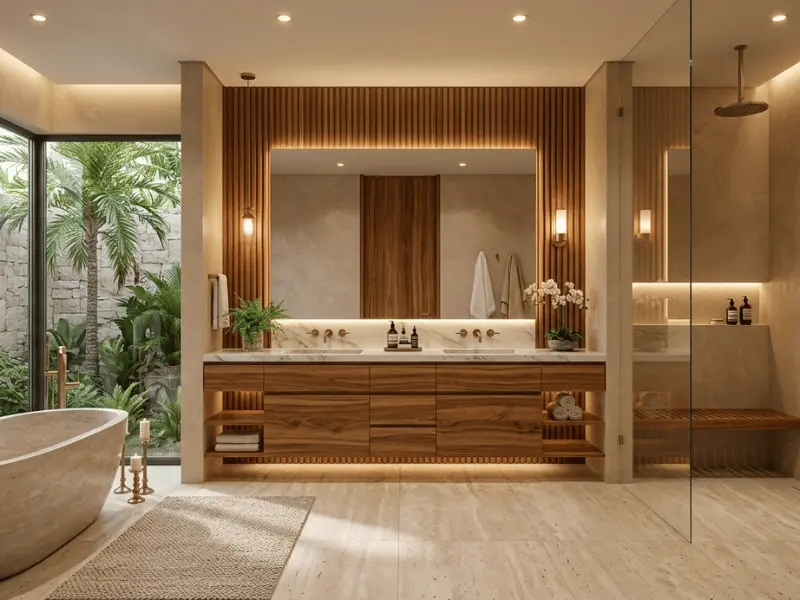
Teak has earned a global reputation for its durability and natural resistance to moisture.
The wood contains natural oils that help protect it from environmental stress, making it particularly suitable for regions with varying humidity levels.
Benefits of Teak
- Excellent moisture resistance
- High durability
- Natural resistance to decay
- Long lifespan
- Premium appearance
Teak is often one of the safest choices when durability is the primary concern. Industry experts frequently recommend teak for environments exposed to humidity cycling due to its inherent stability.
Best Applications
- Bathroom vanities
- Kitchen elements
- Luxury furniture
- Decorative paneling
- Hospitality interiors
Although teak typically comes with a higher upfront cost, its longevity often justifies the investment.
-
Plywood: The Backbone of Quality Joinery
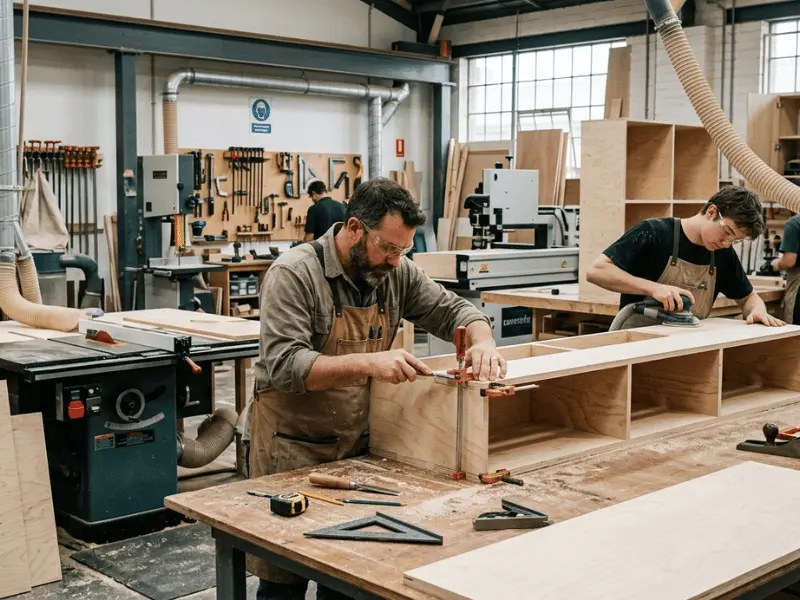
While plywood may not always be visible in finished interiors, it is often the hidden hero behind high-quality fit-out projects.
Plywood consists of multiple wood veneers bonded together, creating a strong and stable structure.
Why Plywood Is Essential
- High structural strength
- Excellent dimensional stability
- Better moisture resistance than MDF
- Long-lasting performance
- Versatile applications
In our experience, premium-grade plywood forms the foundation of many successful joinery and cabinetry projects throughout Dubai.
Best Applications
- Kitchen cabinets
- Wardrobes
- Built-in storage
- Commercial joinery
- Wall structures
For moisture-prone areas, plywood generally outperforms standard MDF and particleboard solutions.
-
Moisture-Resistant MDF: Cost-Effective and Versatile
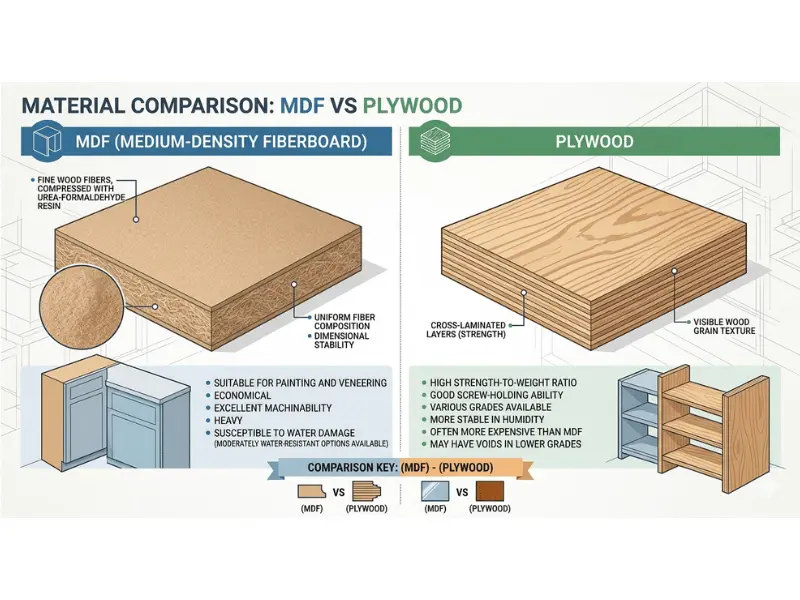 Medium Density Fiberboard (MDF) remains one of the most widely used materials in interior fit-out projects.
However, not all MDF is created equal.
For Dubai interiors, we strongly recommend Moisture-Resistant MDF (MR MDF) instead of standard MDF whenever possible.
Advantages of MR MDF
- Smooth surface finish
- Ideal for paint applications
- Cost-effective
- Suitable for decorative elements
- Consistent quality
MR MDF performs significantly better in humid environments compared to standard MDF. Nevertheless, it should still be avoided in areas with direct water exposure.
Best Applications
- Decorative wall panels
- Painted cabinetry
- Display units
- Reception desks
- Feature walls
For projects that require intricate detailing and painted finishes, MDF remains a highly practical solution.
-
Wood Veneers: Luxury Without the Cost of Solid Timber
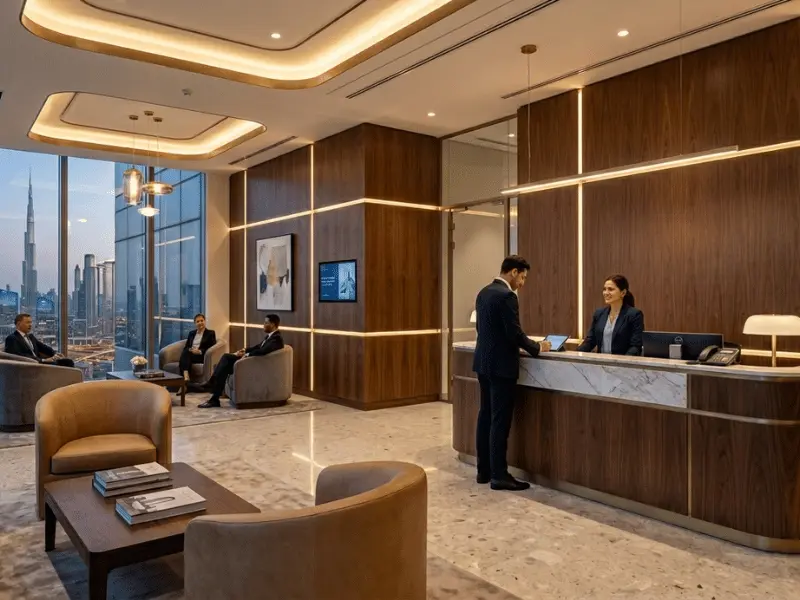
Wood veneers offer an excellent way to achieve the appearance of premium timber while controlling project costs.
A veneer consists of a thin layer of real wood applied to a stable substrate such as plywood or MDF.
Benefits of Veneers
- Authentic wood appearance
- Lower cost than solid timber
- Greater design flexibility
- Reduced material waste
- Consistent finish
Many luxury commercial and hospitality projects rely on veneers to create elegant interiors without the budget implications of solid hardwood.
Best Applications
- Wall paneling
- Corporate offices
- Hotel interiors
- Retail fit-outs
- Reception areas
When properly installed and maintained, wood veneers can deliver exceptional visual results.
Solid Wood vs Engineered Wood: Which Is Better for Dubai?
This is one of the most common questions we receive from clients.
While solid wood remains beautiful and prestigious, engineered wood often performs better under Dubai’s environmental conditions.
Solid Wood
Pros:
- Natural authenticity
- Can be refinished multiple times
- Premium appearance
Cons:
- More prone to expansion and contraction
- Higher maintenance requirements
- Greater risk of warping
Engineered Wood
Pros:
- Superior climate stability
- Reduced movement
- Better performance in air-conditioned environments
- Lower maintenance
Cons:
- Limited refinishing options
- Quality varies by manufacturer
For most Dubai interior projects, engineered wood offers the best balance of beauty, durability, and long-term performance.
How to Choose the Right Wood Material for Your Project
Before selecting materials, consider the following:
1. Location of Installation
Different spaces have different requirements.
- Kitchens require moisture resistance.
- Offices require durability.
- Luxury villas often prioritize aesthetics.
2. Maintenance Expectations
Some materials require regular maintenance, while others offer long-term performance with minimal upkeep.
3. Budget Considerations
A higher initial investment often results in lower replacement and maintenance costs over time.
4. Design Goals
Modern interiors may benefit from lighter woods such as oak and ash, while luxury spaces often incorporate walnut and teak.
5. Climate Compatibility
This is perhaps the most important consideration in Dubai. Materials that perform well in Europe or North America may not necessarily deliver the same results in the UAE.
Why Professional Material Selection Matters
One of the biggest mistakes property owners make is selecting materials based solely on appearance.
A beautiful material that fails after a few years ultimately becomes an expensive decision.
At Sierra, material selection is a critical stage of every fit-out project. Our team evaluates performance, durability, maintenance requirements, and environmental suitability before recommending solutions.
This approach helps clients avoid costly repairs while ensuring interiors remain visually impressive for years to come.
Final Thoughts
The best wood materials for Dubai interiors combine aesthetics with climate resilience.
For most projects, engineered wood remains the top overall choice due to its stability and adaptability. Oak and walnut continue to dominate luxury applications, while teak offers exceptional durability. Plywood provides structural reliability, and moisture-resistant MDF delivers cost-effective versatility for decorative elements.
Ultimately, the most successful interiors are built on informed material choices rather than trends alone.
When selected correctly, wood can transform a space, create lasting value, and deliver timeless elegance that stands the test of time in Dubai’s unique environment.