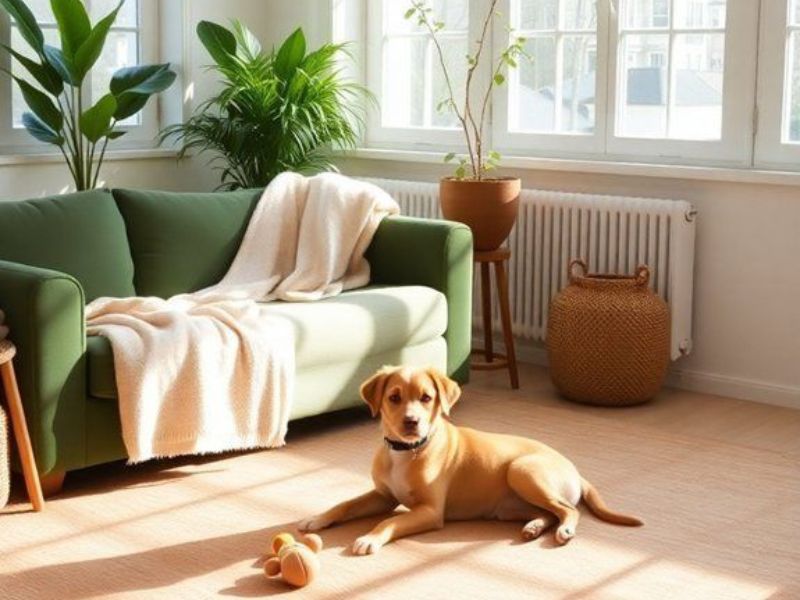
Anyone who lives with a golden retriever in a Jumeirah villa or a spirited cat in a Downtown apartment knows the struggle. We love our pets—they are family—but they can be absolutely brutal on an interior. In our experience at Sierra Contracting, “pet-friendly” is one of the most common requests we get, but it’s often phrased as a plea: “Can I have a beautiful home that doesn’t smell like a dog or look like a scratching post?”
The short answer is yes. But it requires moving away from the “generic” advice of just buying a washable rug. Truly pet-friendly interior design is about making strategic choices during the renovation phase so that you aren’t constantly fighting an uphill battle against fur, mud, and the occasional “accident.”
The “Great Fabric Debate”: Beyond Just Leather
Most clients come to us assuming that if they have pets, they are stuck with leather furniture forever. While leather is durable and wipes clean, it’s not a silver bullet. Large dogs can puncture it with their claws, and in the Dubai heat, leather isn’t always the most comfortable choice for the humans in the house.
Instead, we usually recommend high-performance synthetics. Modern stain-resistant materials like solution-dyed acrylics (often used in outdoor furniture) have come a long way.1 They now feel as soft as indoor linen but are practically bulletproof.
Why Microfiber is Your Best Friend
In our years of styling homes, we’ve found that tight-weave fabrics are the secret. Cats, in particular, love to get their claws into loose weaves like linen or tweed. A tight microfiber or “ultrasuede” doesn’t give them that “grip” they crave, making it one of the most effective scratch-proof surfaces for your sofa. Plus, pet hair tends to sit on top of the fabric rather than getting woven into it, making your Saturday morning vacuuming much faster.

Flooring: The Foundation of a Pet-Friendly Home
In Dubai, we see a lot of polished marble and dark wood. From a design perspective, they are stunning. From a pet owner’s perspective? They can be a nightmare. Dark wood shows every single golden hair, and polished marble can be a “slip-and-slide” for a dog, which is actually quite hard on their joints over time.
Our Professional Recommendation: Large-Format Porcelain
If you are planning a renovation, we almost always point pet owners toward high-quality, matte-finish porcelain tiles.
- Durability: It is the definition of a scratch-proof surface. Even the most energetic Husky won’t leave a mark.
- Maintenance: It doesn’t absorb odors and can be deep-cleaned with almost any product.
- Temperature: It stays cool, which is a lifesaver for pets during the Dubai summer months.
If you’re looking for more specific advice on choosing materials for your upcoming project, take a look at our approach to designing pet-friendly homes.

3 Common Mistakes We See Homeowners Make
It’s easy to get caught up in the aesthetics, but we often see these three oversights that lead to regret six months down the line:
- Choosing “Flat” Paint Finishes: We get it—matte walls look sophisticated. But if your dog leans against a matte wall or a cat rubs against a corner, it leaves an oily mark that is impossible to wipe off without taking the paint with it. We always recommend a “Satin” or “Eggshell” finish for pet owners. It has a slight sheen but can be wiped down with a damp cloth.
- Forgetting the Entryway: Dubai can be dusty. If you don’t have a designated “paw-cleaning station” or a mudroom-style bench near the door, that desert dust becomes mud the second it hits your white rugs.
- Ignoring Vertical Space: For cat owners, the floor isn’t the only “living” area. People often forget that cats want to be high up. If you don’t design pet-safe furniture or shelving for them to climb, they will climb your curtains or your expensive kitchen cabinetry.
Integrating Pet Features into Cabinetry
This is where pet-friendly interior design gets really exciting. Instead of having plastic food bowls and bulky crates sitting in the middle of your kitchen, we recommend “built-in” solutions.
In recent villa renovations, we’ve integrated “pet canteens” into the bottom of kitchen islands—recessed areas where bowls sit off the floor so they aren’t kicked over. We’ve also designed “bedroom” nooks under staircases or inside laundry room cabinetry. This gives your pet a sense of security and keeps your floor plan looking clean and intentional.
The “Camouflage” Strategy: Choosing Colors
This sounds simple, but it’s a tip we find ourselves giving constantly: Match your mid-tones to your pet. If you have a white Persian cat, a charcoal grey sofa is going to look “dirty” within hours. We usually suggest a “salt and pepper” fabric or a multi-tonal weave. These patterns are incredibly forgiving. They hide the inevitable shedding and the small spots that happen between deep cleans. It’s not about being messy; it’s about reducing the stress of perfection.

Rugs: To Buy or Not to Buy?
You don’t have to live in a house of bare tiles. We love rugs for the warmth and acoustic benefits they bring to Dubai’s high-ceilinged homes. However, we suggest avoiding high-pile or “shag” rugs. They act like a trap for dander and are a nightmare to clean if a pet gets sick.
Instead, look for low-pile, synthetic rugs or even high-end “washable” brands. Jute and Sisal are often recommended as “natural,” but in our experience, they can be difficult because they are highly absorbent. Once a smell gets into a jute rug, it’s usually there to stay.
Final Thoughts: A Home for the Whole Family
A home should be a place where you can relax, not a museum where you’re constantly worried about your dog’s paws or your cat’s claws. By focusing on stain-resistant materials and smart layouts, you can create a space that feels luxurious and stays that way.
In our experience, the best designs are the ones that acknowledge the reality of daily life. If you have three dogs and a cat, your home shouldn’t try to hide that—it should be built to handle it beautifully.