The days of the “formal dining room” that only gets used twice a year are quickly fading in Dubai. Whether you are living in a compact apartment in City Walk or a sprawling villa in Arabian Ranches, the demand for space to do more has never been higher. Most clients come to us at Sierra Contracting with a similar challenge: their home needs to be a sanctuary, a high-tech office, a guest suite, and a play area—often all within the same square footage.
In our experience, true multi-functional interior design isn’t about just cramming more furniture into a room. It’s about creating a “fluid” environment where the transitions feel natural. We often see homeowners struggle because they try to force a room to be two things at once, resulting in a space that doesn’t do either well. We usually recommend a more strategic approach—designing for “modes” rather than fixed functions.
-
The Rise of the “Guest-Office” Hybrid
This is perhaps the most common request we handle. With more people working from home in the UAE, the “spare bedroom” is no longer just for the occasional visiting relative.
Our Professional Approach:
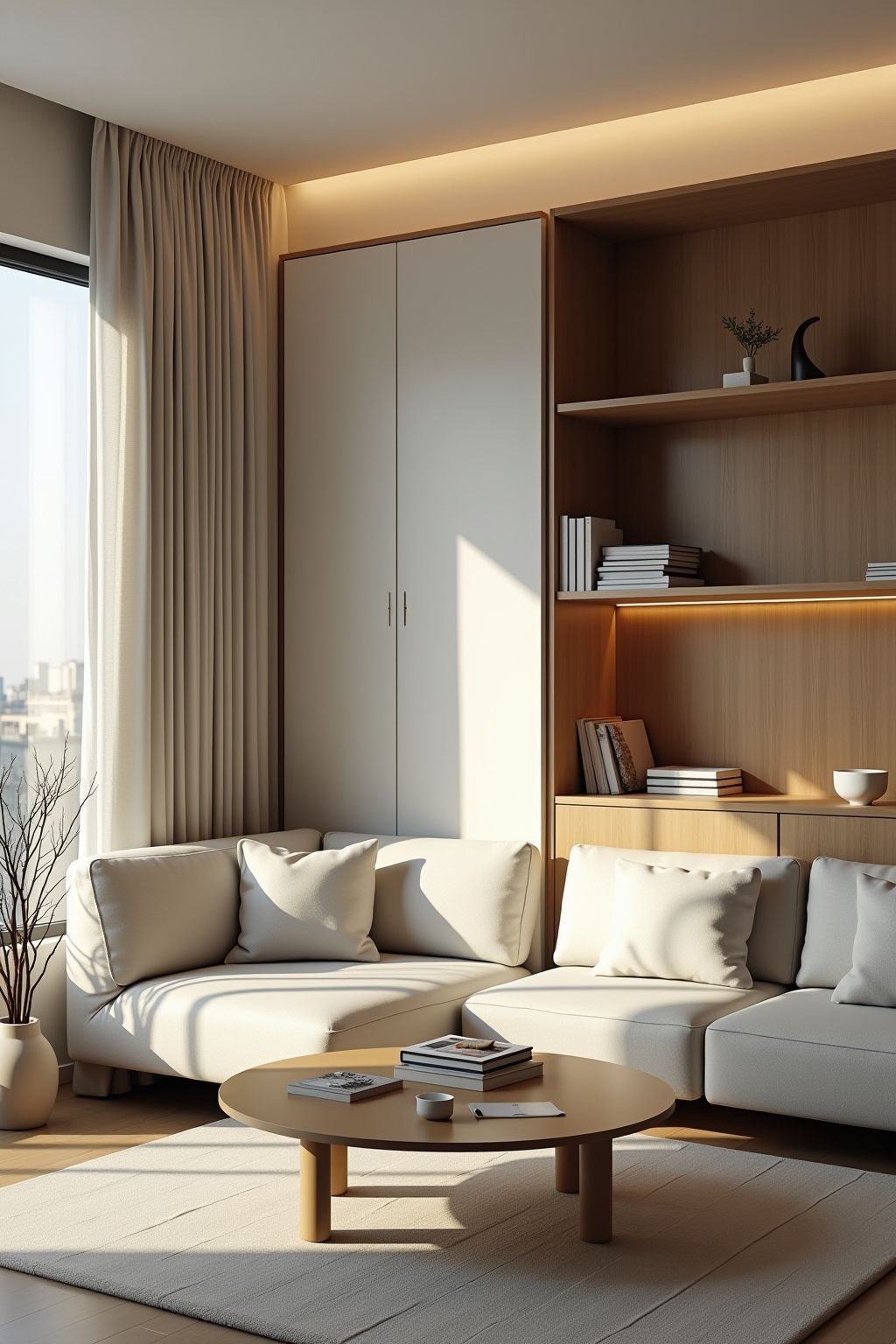
We usually move away from the traditional guest bed. In a multi-functional interior design scheme, a bed takes up 80% of the floor real estate for 90% of the year. Instead, we recommend high-end Murphy beds (wall beds) integrated into custom floor-to-ceiling cabinetry.
This sounds simple, but the execution is everything. By day, the room is a sleek executive office with a clean backdrop for Zoom calls. By night, the bed pulls down effortlessly, and the “desk” is often a modular piece that can be shifted aside. This creates a dual-purpose room that feels like a primary space in both configurations, not a compromise.
-
Smart Zoning for Flexible Spaces
If you have a large, open-plan living area, it can often feel like a vast hall where sound bounces around and nothing feels “cozy.” We often see clients try to fix this by adding more walls, but that usually ruins the light and flow of a Dubai villa.
Why We Recommend “Soft” Boundaries:
To create flexible spaces, we look at what we call “visual anchors.”
- The Rug Strategy: Using two different rug textures can define a “reading nook” within a larger lounge without any physical barriers.1
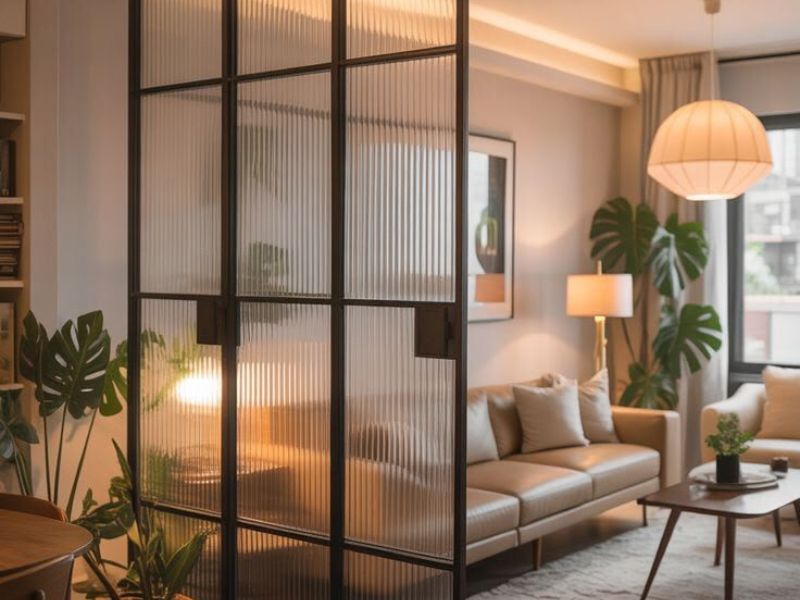
- Double-Sided Joinery: We often design custom shelving units that act as a room divider but remain open on both sides. It provides storage for office files on one side and decorative items for the living room on the other.
If you’re struggling with a layout that feels cluttered or confused, you can explore our specific strategies for designing multi-functional rooms without losing style.
-
Investing in Modular Furniture
In our collective experience, the furniture you choose is the “engine” of a multi-functional home. Static, heavy pieces are the enemy of flexibility.
What We Look For:
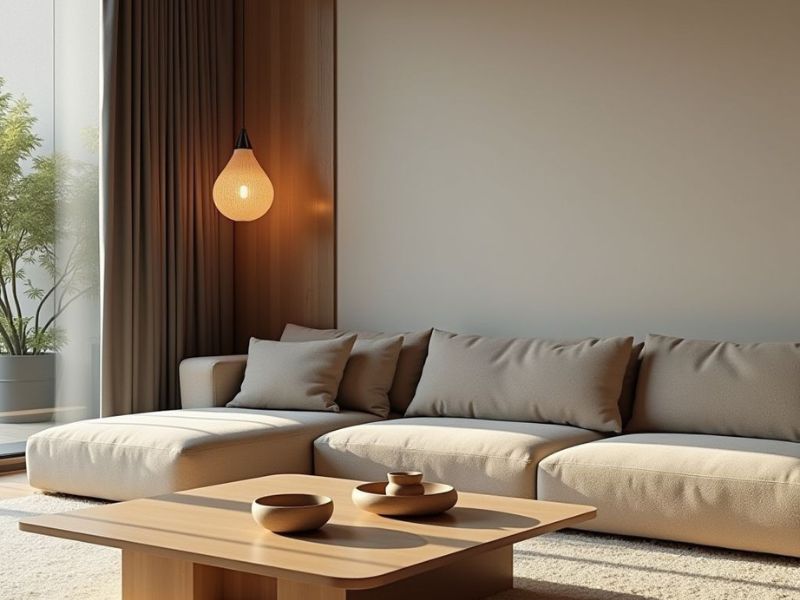
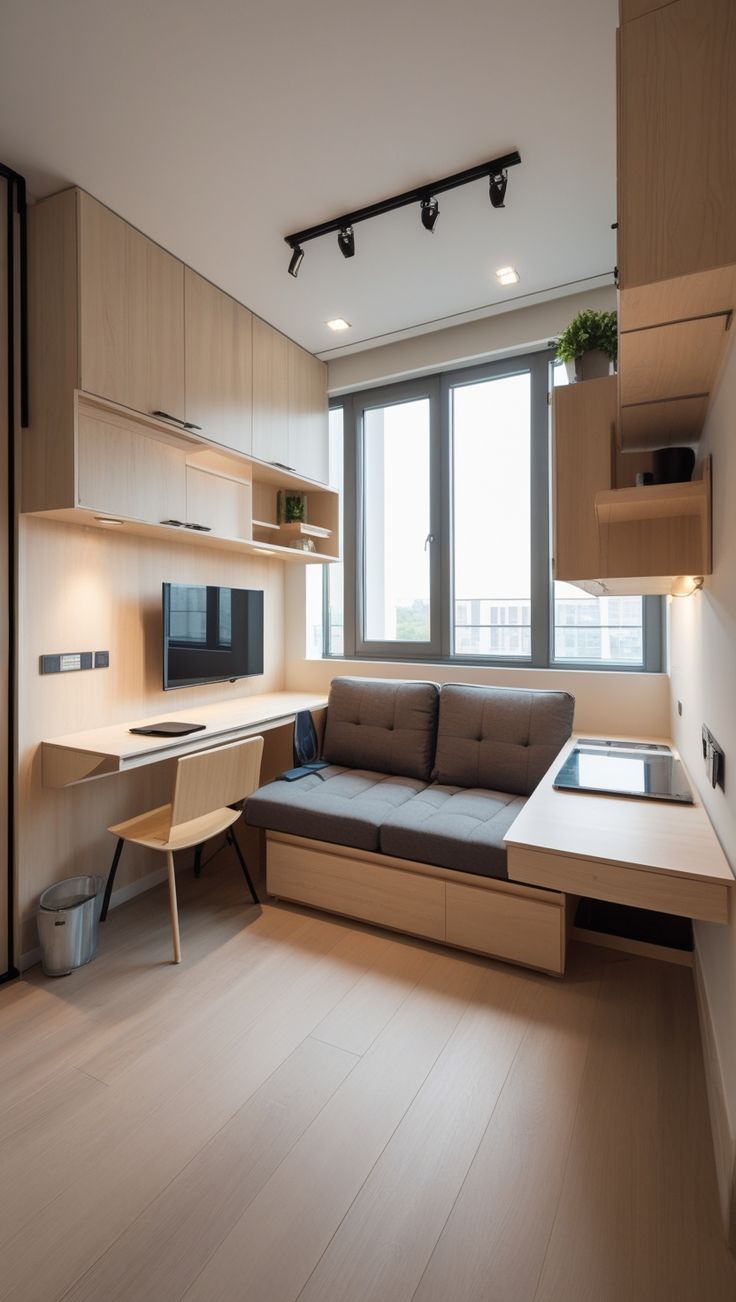
We often suggest modular furniture that can be “re-configured” on the fly. Think of a sectional sofa that can be split into two separate seating areas when you’re hosting a large group, or nesting tables that can be spread out when needed and tucked away to create floor space for a morning yoga session.
The Tradeoff: Modular pieces can sometimes feel a bit “temporary” if the quality isn’t there. In the Dubai market, we usually recommend custom-made modular pieces with high-quality upholstery. It gives you the flexibility you need without looking like you’re living in a dorm room.
-
Common Mistakes Homeowners Make
When trying to create a multi-functional home, we see a few recurring pitfalls that end up causing more stress than they solve:
- Over-complicating the Transition: If it takes 20 minutes to move furniture around to change the room’s function, you won’t do it. A dual-purpose room must be able to “switch” in under two minutes.
- Neglecting Storage: Multi-functional rooms require more storage, not less. If a room is both a playroom and a formal sitting area, you need deep, integrated cabinetry where toys can be hidden completely out of sight.
- Inconsistent Lighting: This is a big one. An office needs bright, cool task lighting, but a guest room or lounge needs warm, ambient light. We usually recommend smart lighting systems where you can “scene-set” (e.g., an “Office Mode” and a “Relax Mode”) at the touch of a button.
-
Utilizing “Dead” Spaces: The Nook Revolution
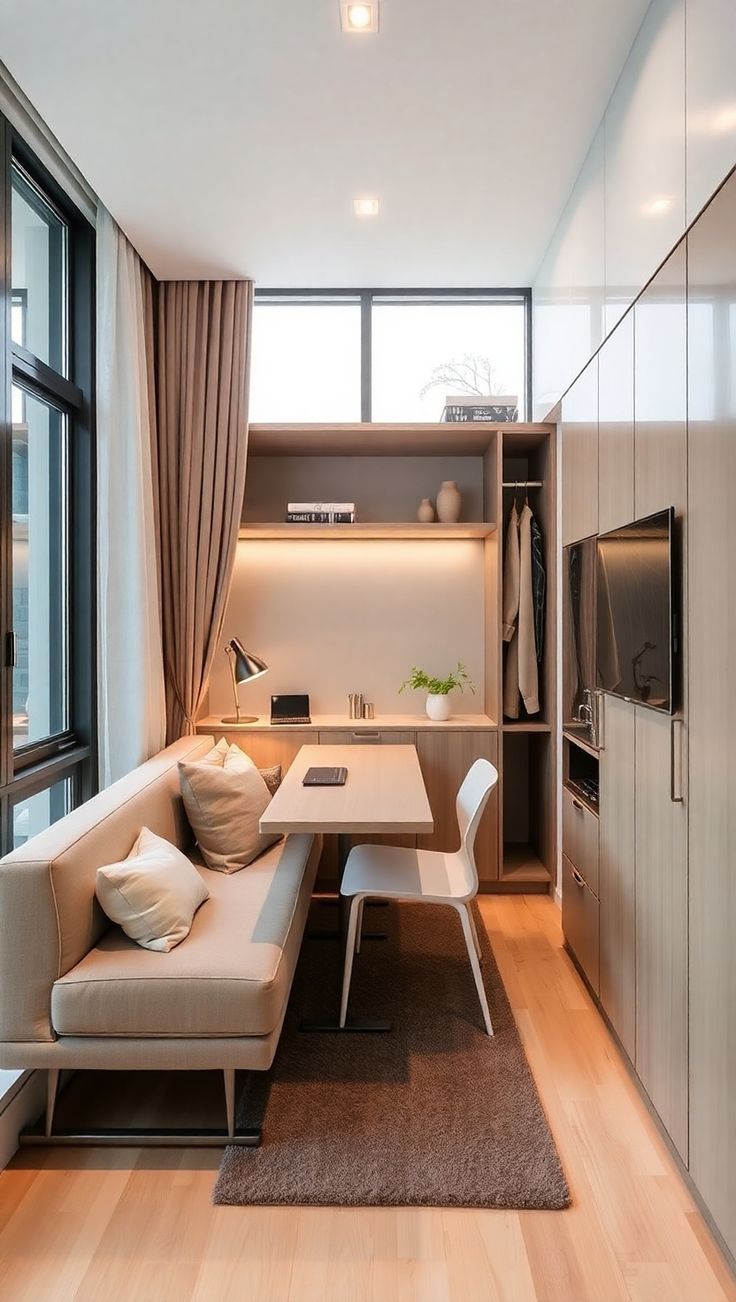
Often, the best way to add a new function to your home isn’t by changing a whole room, but by reclaiming “dead” space. In many Dubai villas, we see large landings, wide hallways, or awkward under-stair areas that go unused.
In our experience, these are goldmines for multi-functional interior design. We have transformed under-stair areas into “clutter-free” wine cellars or tiny, high-functioning workstations. The key is to match the materials—if your staircase is oak, the built-in desk should be oak. This makes the new function look like an architectural feature of the house rather than an add-on.
-
Acoustics: The Hidden Challenge
The biggest complaint we hear about flexible spaces is noise. If the kids are watching TV in the “play zone” of the living room while you’re trying to have a meeting in the “office zone,” the open-plan dream becomes a nightmare.
To combat this, we often integrate acoustic panels disguised as art or use heavy, floor-to-ceiling drapes. These materials absorb sound and provide a “psychological” barrier that makes a multi-functional room feel much more private and organized.
Building for the Way You Live
At Sierra Contracting, we believe that a home should serve you, not the other way around. You shouldn’t have to choose between a home gym and a guest room. With the right multi-functional interior design approach, your home can expand and contract based on your daily needs.
The most successful renovations we’ve completed are the ones where the space feels “smart”—where every square meter is earning its keep. It’s about being intentional with your layout and choosing pieces that work as hard as you do.