Living in Dubai usually means being surrounded by the sleekest glass skyscrapers and the most polished marble surfaces. It’s undeniably luxurious, but in our experience at Sierra Contracting, it can sometimes feel a bit detached from the stunning natural landscape that exists just beyond the city limits.
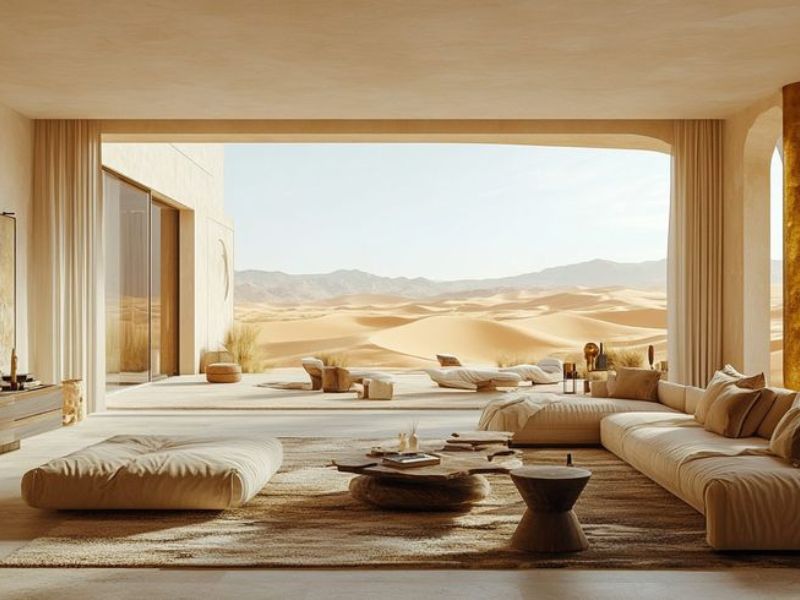
Lately, we’ve seen a significant shift in what our clients are asking for. Instead of the high-contrast “black-and-white” minimalism that dominated the last decade, homeowners are looking for something more grounded. They want their villas to feel like a sanctuary that belongs in the Emirates. This has led to the rise of desert-inspired interior design—a style that trades clinical coldness for the soul-warming textures of the dunes.
-
The Foundation: Mastering Warm Palettes
When people hear “desert-inspired,” they often worry the house will just look… beige. But in our years of styling Dubai interiors, we’ve learned that the desert palette is surprisingly rich.
We often see the best results when we layer warm palettes that pull from the different phases of a desert day. We usually recommend:
- The Midday Sands: Soft taupes, creamy oatmeals, and “sun-faded” rose.1
- The Sunset Glow: Deep terracotta, burnt sienna, and ochre.2
- The Oasis Edge: Muted sage greens and dusty olives to provide a cooling visual break.
Our Tip: This isn’t just about paint. We usually recommend using these colors through lime-wash finishes or “Tadelakt” (a Moroccan plaster). These techniques create a soft, mottled movement on the walls that mimics the shifting light on a sand dune, adding depth that flat emulsion paint simply can’t achieve.

-
Introducing Sand Textures and Tactile Finishes
In a city that loves shine, the “secret sauce” of a desert-inspired home is actually matte. To truly capture the aesthetic, you need to lean into sand textures.
Why Texture Overrides Pattern
In our collective experience, busy patterns can often clutter a room. Instead, we use texture to create interest. For a recent villa renovation, we replaced high-gloss floor tiles with large-format matte sandstone. The difference was immediate—the room felt quieter, softer, and much more expensive.
We also suggest:
- Textured Plaster Walls: Rougher finishes that feel like weathered stone.
- Bouclé and Linen: Heavy, tactile fabrics for sofas and curtains that invite you to touch them.
- Jute and Sisal: Natural fiber rugs that ground the furniture and add a rustic, organic layer.
If you are planning a full-scale renovation to incorporate these elements, you might find our insights on the top interior design trends for villas in 2025 helpful for planning your timeline and budget.

-
Integrating Middle Eastern Interior Trends (The Modern Way)
Desert design is naturally linked to heritage.3 However, the 2025 version of Middle Eastern interior trends is far from the “ornate palace” look. It’s about “Contemporary Arabian Fusion.”
Modern Heritage Elements:
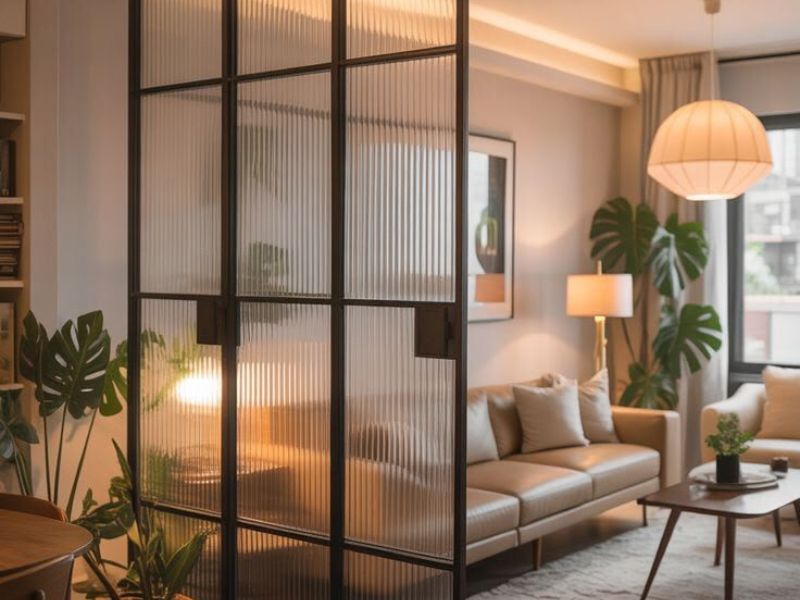
- Geometric Woodwork: Instead of heavy, dark Mashrabiya screens, we are now installing light oak or ash wood partitions with simplified geometric patterns. They provide privacy and a nod to tradition without making the room feel “themed.”
- Low-Slung Seating: Taking inspiration from the traditional Majlis, we often design custom “sunken” lounges or oversized, modular sofas that sit closer to the ground. This creates a more relaxed, conversational atmosphere.
- Handcrafted Ceramics: We usually recommend sourcing oversized, unglazed clay pots. Placing a 1.5-meter terracotta vase in an empty corner creates a powerful architectural statement that feels ancient yet perfectly modern.
Common Mistakes: How to Avoid the “Dusty” Look
One of the biggest risks with desert-inspired interior design is that if you go too heavy on the browns and beiges, the house can start to feel a bit dull or “dirty.”
- Ignoring the Contrast: We often see homeowners forget to add a “punch” of color. In our experience, adding a few accents in deep emerald green or even a matte black helps to define the edges of the room and prevents the warm tones from bleeding into each other.
- Poor Lighting Choices: Warm-toned interiors need warm-toned light. If you use “cool white” LED bulbs in a terracotta-colored room, the walls will look grey and muddy. We always insist on 2700K to 3000K (warm white) bulbs to make the desert tones “pop” at night.
- Over-Minimalizing: The desert is vast, but it isn’t empty. It’s full of life and texture. Don’t be afraid to layer your rugs or pile up the linen cushions. A desert home should feel like an oasis—a place of comfort, not a sparse gallery.
-
Bringing the “Oasis” Indoors (Biophilic Design)
You cannot have a desert-inspired home without the contrast of greenery. This is where the concept of the “Oasis” comes in.
In Dubai, we usually recommend hardy, drought-resistant plants that fit the aesthetic but can thrive in air-conditioned environments. Think Date Palms (if you have the ceiling height), Olive Trees, or Snake Plants. Placing these against a warm, sandy-textured wall creates a stunning visual contrast—the vibrant green against the earthy clay is the hallmark of high-end UAE design.

Final Thoughts: A Grounded Way to Live
At Sierra Contracting, we’ve found that desert-inspired homes tend to be the ones our clients stay in the longest. There is a timelessness to these materials and colors. They don’t go “out of style” like a specific neon light or a trendy wallpaper might. They feel permanent, restful, and deeply connected to the land we live on.
By focusing on warm palettes, authentic sand textures, and subtle Middle Eastern interior trends, you can transform a standard Dubai villa into a home that feels like it has a story to tell.