
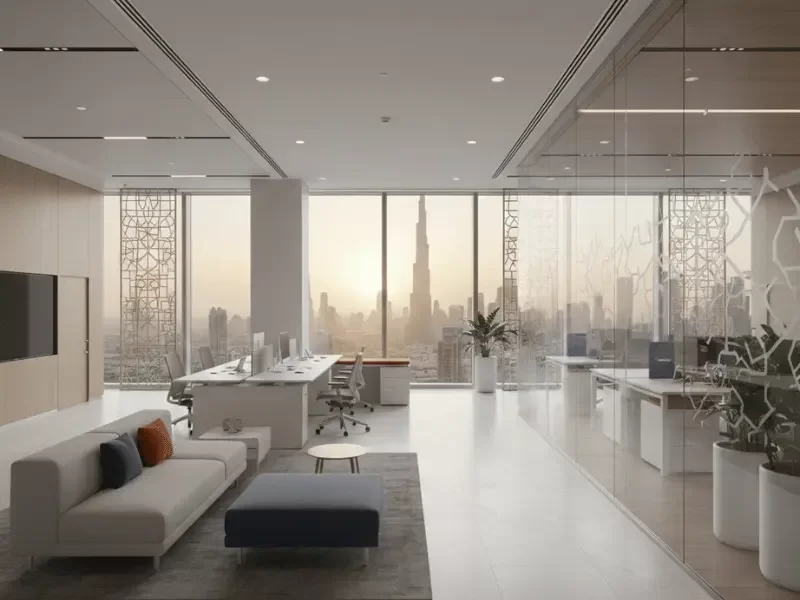
Planning an office fit-out in Dubai can feel exciting—and overwhelming at the same time. You’re not just choosing finishes or ordering desks. You’re making a long-term business decision that affects productivity, brand perception, client confidence, employee wellbeing, and legal compliance.
Dubai fit-outs also come with a unique challenge: strict approvals and inspections. Depending on where your office is located (mainland vs free zone), the authority pathway changes, and missing approvals can delay your handover—or worse, cause rework.
This guide breaks the process into practical steps and clear guidelines so you can plan a fit-out that is compliant, cost-controlled, and built to perform.
Why office fit-out matters (it’s not “just interiors”)
Productivity and workflow
A well-planned office layout reduces friction: fewer distractions, better adjacencies (teams that need to collaborate sit closer), and meeting spaces that actually support how people work.
Brand perception
Your office is a physical version of your brand. If your website looks premium but your reception feels cramped or dated, the gap is noticeable.
Growth readiness
Most businesses don’t fail because they outgrow the market—they struggle because their operations and workspace can’t scale. A good fit-out builds flexibility from day one.
Employee satisfaction
Comfort, lighting, acoustics, air quality, and ergonomics directly affect morale and retention—especially in high-pressure environments.
Step 1: Define objectives before design begins
Before you look at floor plans or Pinterest boards, define what success looks like. Ask:
- Are we optimizing for collaboration or focus?
- Do we need more seats without overcrowding?
- Is client experience a priority (boardroom, reception, VIP zones)?
- Are we planning for growth in 12–24 months?
Good objectives are measurable, like:
- Increase capacity from 24 to 34 staff without reducing comfort.
- Add 2 meeting rooms + 2 phone booths to cut noise and interruptions.
- Create a client arrival journey that matches brand positioning.
- Enable hybrid work (hot desks + touchdown points + lockers).
When goals are clear, your fit-out decisions become easier—and less emotional.
Step 2: Budget properly (and demand a comprehensive estimate)

Budget is where many fit-outs fail—not because companies don’t have money, but because they don’t have a complete scope early.
A proper estimate should clearly separate:
1) Design & documentation
- space planning
- concept design + 3D visuals
- authority drawings (architectural + MEP + fire/life-safety where required)
2) Authority approvals & NOCs
Depending on your zone and building, approvals may involve:
- Dubai Municipality
- Dubai Civil Defence
- DEWA
- Free zone authorities (example: Dubai Development Authority shows fit-out permit requirements and notes Civil Defence completion is needed before fit-out completion certification).
3) Construction & fit-out works
- partitions, ceilings, flooring
- joinery & carpentry
- paint, finishes
- MEP (HVAC, electrical, plumbing)
- fire safety scope (if applicable)
- signage, glass frosting, branding elements
4) Furniture & equipment
- workstations, executive furniture
- storage, lockers
- reception desks
- pantry fittings
5) IT & low-current
- data points, server room, cooling
- access control
- CCTV
- AV for meeting rooms
6) Project management + handover
- site supervision
- testing & commissioning
- snagging + rectification
- as-built drawings (if included)
Guideline: don’t accept “starting from” quotes without a detailed inclusions list. You want fewer surprises, not cheaper headlines.
Dubai cost reality check (ranges vary)
Multiple Dubai-based guides publish wide ranges because scope and quality differ (basic vs standard vs premium, and how heavy the MEP work is). For example, some sources cite ranges like AED 220–650 per sq ft, while others publish broader ranges depending on specification and complexity.
Use these only as planning ranges—your real cost comes from a site survey + defined scope.
Step 3: Choose the right office space (if relocating)

If you’re moving, your space choice will either simplify your fit-out—or make it expensive.
Look for:
- Building allows interior modifications (some restrict changes)
- Ceiling height (impacts HVAC and lighting design)
- Column grid and core placement (affects planning efficiency)
- Existing MEP condition (old systems can create surprise costs)
- Natural light and views (boostes wellbeing and reduces lighting load)
- Access: parking, lifts, loading bays, service access
Tip: Ask the landlord/building management early about:
- approved contractors list (some buildings require it)
- working hours and noise rules
- fire alarm / civil defence integration process
Step 4: Understand approvals and compliance (don’t treat this as “later”)
Dubai fit-out approvals are not optional. Many projects require approvals before work starts, and completion certification before handover/operation.
A common explanation of “fit-out approval” is that it’s the required permits/clearances to modify interiors (partitions, ceilings, MEP, fire systems, finishes) through relevant authorities such as Civil Defence, Municipality/Development Authority, utilities, and specific jurisdictions.
What business owners should do
- Confirm jurisdiction: mainland vs free zone
- Confirm whether fire system changes trigger Civil Defence process
- Ensure the contractor/consultant is experienced with your building authority pathway
- Request an approvals timeline in writing (with dependencies)
Example: free zone fit-out permit pathway
The Dubai Development Authority fit-out permit information includes practical constraints (e.g., rules around coring and structural impact) and notes that a Civil Defence completion certificate is required before fit-out completion certification.
Step 5: Space planning & workflow (the guideline most companies skip)
An office isn’t desks. It’s an operating system.
Plan zones intentionally
Focus zones
- quiet desks
- library-style seating
- small rooms for deep work
Collaboration zones
- open collaboration tables
- agile meeting corners
- project rooms
Client-facing zones
- reception that matches your positioning
- meeting rooms designed for experience
- boardroom + waiting lounge
Support zones
- pantry / café area
- print & storage
- IT/server
- lockers (especially for hybrid teams)
A Dubai-relevant note: hybrid is growing
Dubai offices increasingly mix assigned desks with shared touchdown points, phone booths, and flexible meeting zones. That flexibility helps you scale without redesigning every year.
Step 6: Ergonomics and wellbeing (performance is built into design)

Modern fit-out guidelines prioritize wellbeing because it impacts output and retention.
Key wellbeing pillars:
- Ergonomic seating + adjustable desks where possible
- Proper lighting design (ambient + task lighting)
- Acoustic control (noise is a productivity killer)
- Indoor air quality + ventilation planning
In Dubai, HVAC performance is especially critical (comfort, humidity control, energy efficiency). If HVAC is undersized or poorly distributed, even a beautiful office feels unbearable.
Step 7: Materials that last (durability without looking “cheap”)
Fit-outs take daily wear. Choose finishes that balance aesthetics with long-term maintenance.
Smart material rules:
- Use durable flooring in high-traffic zones
- Choose cleanable finishes in pantry areas
- Specify scratch-resistant laminates where needed
- Avoid “too trendy” elements that date fast
Popular fit-out materials often used in Dubai offices:
- Glass partitions (light + openness)
- Acoustic panels (privacy + comfort)
- Carpet tiles / vinyl tiles (easy replacement)
- Sustainable wood / recycled materials (ESG alignment)
Step 8: Technology integration from day one (not as an afterthought)
If you plan tech late, you pay twice—once to install, again to fix.
Plan early for:
- Wi-Fi design and access points
- LAN points at the right desk clusters
- Server room sizing + cooling
- Access control + CCTV coverage
- AV for meeting rooms (camera angles, mic placement, acoustics)
- Smart lighting controls and energy management
Future-proofing is simple: run extra conduits, include spare capacity in trays, and plan scalable rack space.
Step 9: Timeline planning (realistic phases, less disruption)

A typical Dubai office fit-out timeline often includes:
- design + approvals
- construction + MEP works
- IT setup + testing/commissioning
- snagging + handover
Many Dubai cost/timeline guides cite broad project durations depending on complexity and approvals.
Your timeline should be based on:
- authority requirements
- building restrictions (working hours, access)
- lead times for materials (especially imported items)
- joinery manufacturing time (if custom)
Business owner tip: ask your contractor for a weekly progress plan and reporting format. Transparency prevents “silent delays.”
Step 10: Contractor selection (your biggest risk and biggest leverage)
The best design can still fail with the wrong execution partner.
What to look for in a fit-out partner
- Proven experience delivering Dubai offices in your category
- Clear understanding of approvals and documentation pathway
- In-house capability where it matters (joinery, MEP coordination)
- Transparent project management (program + milestones)
- Quality control and a proper snagging process
- Aftercare and warranty clarity
Questions to ask before signing
- Who handles approvals—your team or theirs?
- What is included/excluded in the quote?
- What happens if materials are delayed?
- How do you handle variations (and how are they priced)?
- Who is the site project manager (and how often will they be on site)?
Handover checklist (snagging done properly)
During handover, do a walkthrough and check:
- Paint quality and finish consistency
- Ceiling alignment, light uniformity
- Switches, sockets, and labeling
- HVAC performance (hot spots, airflow balance)
- Fire/life-safety completion items (as applicable)
- Door hardware, glass alignment, seals
- Network points, Wi-Fi coverage, AV functionality
- Furniture placement, stability, and defects
Don’t rush this stage. A disciplined snagging process prevents months of frustration later.
Dubai fit-out trends worth considering in 2026
Dubai offices are adopting global workplace trends, with local customization:
Biophilic design
Greenery + natural materials + light to improve comfort and mood.
Open plan with quiet zones
Open collaboration—balanced with privacy booths and acoustic treatment.
Sustainable interiors
Eco-friendly materials and energy-efficient systems, aligned with ESG goals.
Technology-integrated spaces
Smart access, automation, and better meeting room tech.
Subtle cultural influence
Arabic-inspired patterns, textures, or hospitality cues—when aligned with your brand.
Quick guidelines recap (for busy business owners)
If you remember only 10 things, remember these:
- Start with measurable objectives
- Demand a complete scope-based quotation
- Confirm your jurisdiction (mainland vs free zone) early
- Treat approvals as a project phase, not a “task”
- Plan workflow zones—not just desks
- Prioritize acoustics and HVAC comfort
- Choose durable materials with low maintenance
- Integrate IT/AV/security from day one
- Use a realistic timeline with weekly reporting
- Choose a partner with proven Dubai approvals + execution strength


