Reducing construction cost doesn’t mean cutting corners or sacrificing quality. In fact, the most successful construction projects today are those that optimize planning, materials, and execution—not those that simply chase the lowest price.
Many homeowners and developers assume that high-quality construction automatically comes with high expenses. The truth is, poor planning, wrong material choices, and inefficiencies are the real reasons construction budgets spiral out of control. With the right strategy, it is absolutely possible to control construction costs while maintaining durability, safety, and aesthetics.
This guide breaks down practical, proven ways to reduce construction costs without compromising quality, using modern construction practices, technology, and smart decision-making.
1. Begin with Comprehensive Planning & Correct Cost Estimation
One of the biggest reasons construction costs increase is starting without a clear plan.
Why planning matters:
- Prevents changes in design when construction takes place
- Reduces Material Wastage
- Assists with forecasting labor & timeline correctly
Best Practices:
- Finalize the architectural and structural design drawings prior to execution.
- Develop a detailed BOQ (Bill of Quantities)
- Include contingency costs (5–10%) instead of reacting to surprises.
2. Select the Right Construction Materials and Not the Most Costly Ones
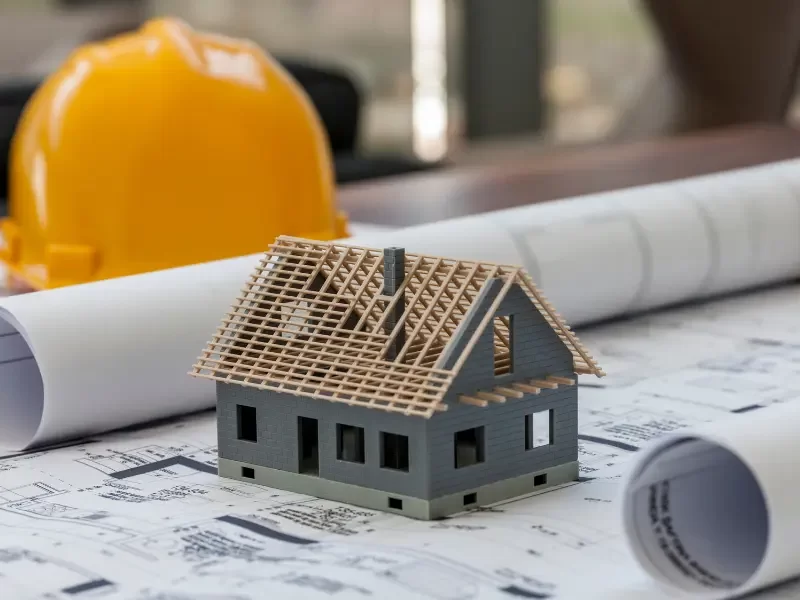
High price is not always equivalent to high quality. The point is to choose and use materials that offer the best possible price-performance combination.
Smart material strategies:
- Use locally available materials to reduce transportation costs.
- Use engineered materials that provide durability at an affordable price.
- Compare brands for cement, steel, and blocks, instead of choosing blindly.
Example:
- High-grade cement is used selectively (structural areas)
- Standard-grade cement is used for non-load-bearing work.
These actions help preserve the structure’s integrity in addition to minimizing the costs of construction.
3. Do Not Make Design Changes During Construction
Frequent changes in design are among the most costly errors that might happen during construction work.
How Design Changes Increase Cost:
- Demolition and rework
- Materials wastage
- Labor delays
- Extended Project Timelines
Solution:
- Utilize 3D visualizations and walkthroughs prior to execution.
- Plan layouts, points of electrical connection, and routes of water pipes early
- Obtain all stakeholder approvals prior to constructing.
A finalized design will save as much as 10-25% of construction costs.
4. Optimize Structural Design without Overengineering
Over-engineering can be considered one of the unseen cost drivers that affect the building.
Common Issues:
- Excess steel reinforcement
- Over-designed slabs and beams
- Excess wall & floor thickness
Smart approach:
- Engage an experienced structural engineer.
- Design based on the actual load requirements
- Follow updated building codes and standards.
An effective structural design optimizes safety, durability, and cost – all at once.
5. Enhance Site Management and Supervision
Inadequate site supervision leads to:
- Material theft
- Wastage
- Improper workmanship
- Refurbishment cost
Cost-saving site practices:
- Employ a competent site supervisor.
- Track material usage daily
- Ensure that proper construction practice is followed.
Site management can independently decrease the cost of construction by 8-12%.
6. Utilization of technology to control construction costs.
Modern construction technology plays a major role in cost efficiency.
Technologies that help:
- Construction Management Software for Budgeting & Scheduling
- Digital procurement for competitive pricing
- 3D modeling (BIM) to detect clashes early
These aid in determining issues before they become expensive site issues
7. Plan Labor Efficiently
Labor cost is a major component of total construction cost.
Smart Labor Strategies:
- Employ a skilled workforce rather than too many unskilled workers.
- Organize working hours to prevent staying idle.
- Avoid overtime caused by poor coordination.
Effective labor management planning can ensure quality and minimize expenses.
8. Minimizing Material Wastage on the Construction Site
Material wastage directly increases construction cost.
Common wastage areas:
- Cement and sand losses
- Improper Storage
- Misleading Measurements
Solutions:
- Store materials properly
- Order materials in phases
- Standardized units of measure and modular design
Sustainable construction methods also lead to huge cost savings.
9. Turnkey Construction to Optimize Cost Margins
Turnkey projects may be cost-efficient compared to dealing with multiple vendors.
Advantages of Turnkey Construction:
- Single point of responsibility
- Better coordination
- Fixed or controlled budgets
- Decreased Delays & Rework
For many clients, turnkey solutions help control construction costs without reducing quality expectations.
10. Consider Long-term Value and not short-term Price.
In some cases, using the lowest cost will increase the maintenance and repair expenses in the future.
Smart long-term decisions:
- Use waterproofing that is of high quality.
- Install high-quality plumbing and electrical systems.
- Select easy-to-maintain finishes.
This solution guarantees the reduction of lifecycle cost, although the construction cost may be a bit more expensive.
Commonly Asked Questions
Q: How to lower the construction cost and at the same time ensure that the quality is not compromised?
Extensive planning, choice of the right materials, no alterations in the design, and revision of the supervision of the site can contribute more toward lessening the cost of the construction, without compromising the quality.
Q: What will be the greatest effect on the cost of the construction?
The main factors that are escalating the construction cost are a deficit in planning, design deviation, material wastage, and mismanagement of human resources.
Q: Is the turnkey construction less expensive?
Turnkey construction tends to have stronger control of cost, based on planned integration, limited time wastage, and fewer coordination problems.
Q: Does technology indeed make construction cheaper?
Yes. Project management software, three-dimensional design, and technological solutions like BIM can assist in eliminating errors in the early phases of designing the building, which saves money.
Conclusion
It is possible to state that cost control has nothing to do with compromises, but with smart decisions.
The optimization of cost in construction is not possible by simply choosing the most low cost materials or reducing the critical components. It entails making plans and doing the right things.
When you focus on:
- Proper Planning
- Smart material selection
- Technology-driven execution
- Skilled supervision
You get good construction that does not exceed the budget- and brings future benefits.
When properly implemented, the lowering of construction costs is an intelligent investment plan, rather than a trade-off.
About the Author
Dr. Sarah Rajabi, Ph.D., P.Eng
Founder & Executive Director, Sierra Turnkey Contracting LLC
Dr. Sarah Rajabi leads one of the UAE’s premier construction and fit-out companies. With extensive experience in luxury residential and commercial renovations, she combines technical expertise with style and precision, helping homeowners create spaces they truly love.